Investor & Fund Management Security Essentials. SOC II, Encryption & 2FA

The Imperative of Security in Fund Management As transactions and data exchanges increasingly occur online, the risk of unauthorized data access and financial fraud escalates. Security is therefore not just an advantage, but a necessity.

The Imperative of Security in Fund Management As transactions and data exchanges increasingly occur online, the risk of unauthorized data access and financial fraud escalates. Security is therefore not just an advantage, but a necessity.

Asset Class Team

READ TIME:

3 MIN

Table of Contents

Title

The Imperative of Security in Fund Management

As transactions and data exchanges increasingly occur online, the risk of unauthorized data access and financial fraud escalates. Security is therefore not just an advantage, but a necessity.

It is essential, therefore, to ensure that your investment management and investor relations platform isn't just effective, but also resilient against potential security threats. At Asset Class, we prioritize security above all else, safeguarding sensitive financial data with an impregnable security infrastructure. In order to provide this, we deploy a robust suite of security measures, starting with a highly significant one - our SOC II certification.

The Backbone of FundOS Security: SOC II Certification

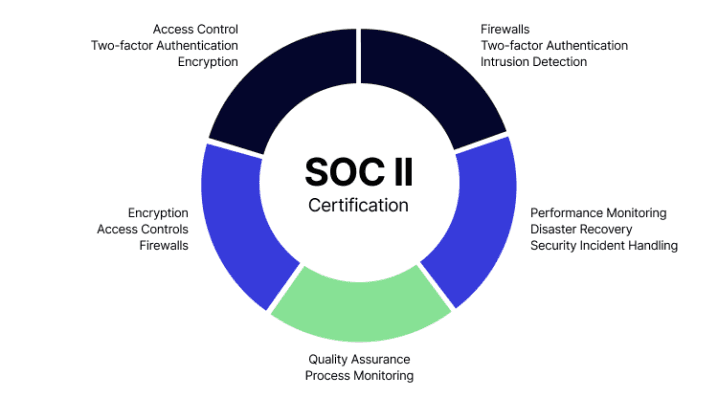
The SOC II certification (Service Organization Control II) is awarded to businesses that demonstrate exceptional data protection. Earning it is no simple task and it requires passing a comprehensive audit that tests five trust service principles of:

  1. Security

  2. Availability

  3. Processing integrity

  4. Confidentiality, and

  5. Privacy

The SOC II certification is considered the gold standard in data security, showcasing Asset Class's commitment to maintaining stringent security controls throughout our organization, and forming the backbone of our security infrastructure.

This level of security certification ensures that we have established and follow strict information security policies and procedures. To maintain it we then undergo regular, rigorous audits that evaluate our adherence to the outlined principles. This helps to ensure our clients that they can be confident in their financial data and transactions being secure. It also signals that we maintain high levels of data protection, infrastructural resilience, system safeguards, and that we are equipped to counter emerging threats.

In a nutshell, our SOC II certification guarantees that your sensitive data is in safe hands, shielded by a tested and trusted security infrastructure. However, this is just one piece of our security strategy, with encryption a key aspect of that strategy.

Encrypted Protection: Safeguarding Data at Every Step

Encryption is a fundamental layer in the security architecture of any modern financial platform, and FundOS is no exception. We employ advanced encryption methods to ensure your data is inaccessible to unauthorized users at every stage - while it's being stored, processed, or transmitted.

Our platform uses end-to-end encryption, a security method where information is transformed into an unreadable format, which can only be decoded using a specific key. This means your data remains secure whether it's in transit across networks or resting in our databases. Even in the unlikely event of a breach, encrypted data remains incomprehensible to intruders, thus preserving its confidentiality.

In addition to our baseline encryption, we employ secure hashing algorithms to further protect sensitive data, like passwords. Rather than storing your actual password, we store a unique 'hash', or digital fingerprint of it. This means that even if an intruder gains access, they can't reverse-engineer your password from the hash.

We also use secure protocols like HTTPS and TLS for data transmission. These protocols encrypt the data before it's sent, ensuring that it cannot be intercepted and read during transit.

Together, these encryption measures form a comprehensive shield for your data, making the FundOS platform a fortress against potential cyber threats. However, security isn't just about technology - it's also about people and processes.

Beyond Encryption: The Multilayered Defense System

While our SOC II certification and encryption protocols provide a formidable layer of defense at the layer of technology, we further strengthen this shield with additional measures at the layer of human behaviour.

One crucial element of our defense system is two-factor authentication (2FA), which adds an extra layer of protection beyond your password. With 2FA, accessing your account requires not only something you know (your password), but also something you have (like a unique code sent to your phone). This makes it significantly harder for malicious actors to gain access, even if they somehow manage to get your password.

Next, our system undergoes regular internal security audits. These systematic evaluations assess our platform's adherence to security best practices and protocols, ensuring that we identify and mitigate any potential vulnerabilities swiftly, before they become a problem. Our audit results not only affirm our commitment to security but also provide actionable insights for continuous improvement.

Lastly, we have implemented a range of security protocols designed to further fortify our platform. From regular software updates to intrusion detection systems, our multilayered security system ensures we are always ahead of potential threats, providing an investment platform you can trust.

Prioritizing Security with FundOS

As you are well aware, data security isn't an option - it's a necessity. We recognize this imperative and have meticulously designed our FundOS platform to prioritize security at every step.

From the robust SOC II certification to state-of-the-art encryption and multi-layered defense systems, we strive to provide you with the peace of mind you deserve. In a world where digital threats are continually evolving, so too are our efforts to safeguard your sensitive financial information.

Trust in Asset Class and the FundOS platform, where we turn the promise of top-tier security into a reality, ensuring that your investment journey is not only successful but also secure.

Stay Ahead in Private Capital

Get exclusive insights delivered to your inbox.

Helping you optimize operations, strengthen investor relationships, and scale your firm efficiently.

Frequently asked questions

What is Asset Class?

Asset Class is a platform built for private capital firms. It combines CRM, investor relations, fundraising, and portfolio management into a single connected platform built on Salesforce infrastructure, serving PE, VC, real estate, private debt, family offices, hedge funds, and wealth management firms.

Who uses Asset Class?

Asset Class is used globally by private capital firms across private equity, venture capital, real estate, private debt, family offices, hedge funds, registered investment advisers, wealth managers, corporate venture capital arms, and fund administrators, from emerging managers to large multi-strategy firms.

What problem does Asset Class solve?

Asset Class solves fragmented workflows at private capital firms by bringing CRM, investor relations, fundraising and portfolio reporting into one system of record, where every piece of data is connected, auditable and real-time. Athena, the AI layer of Asset Class, answers plain-language questions on any record and drafts reports and follow-ups for your team to approve. Every answer cited to source.

Is Asset Class built on Salesforce?

Yes, Asset Class is built on Salesforce's Force.com platform, inheriting the world's leading CRM engine, enterprise-grade security, and access to thousands of pre-integrated apps on the Salesforce AppExchange. Existing Salesforce clients can easily deploy Asset Class within their current org.

How does Asset Class help private capital firms grow?

Asset Class helps private capital firms grow by automating fundraising, investor onboarding, capital calls, distributions and portfolio reporting on one platform, so teams can spend their time on deals and investor relationships. Athena, the AI layer of Asset Class, ranks your book by opportunity with its Relationship Score and drafts tailored follow-ups for your team to approve, so firms engage the right LPs first.

What is Athena in Asset Class?

Athena, the AI layer of Asset Class, gives every member of your team their own Claude-embedded AI agent for investor relations, business development, finance, compliance or portfolio management. Each agent works only within that person's permissions. Athena reads your firm's data, drafts the work and queues it for review. Your team approves, amends or rejects each item, and the decision, approver and timestamp are recorded.

Which AI model does Asset Class use?

Asset Class uses Claude, the AI model built by Anthropic. Athena, the AI layer of Asset Class, embeds Claude across the platform and connects it to your records, documents and actions. Asset Class accesses Claude through Anthropic's commercial API, so your firm's data is never used to train AI models. Each agent can only see and act on data its user is permitted to access.

Does Asset Class automate data entry?

Yes, Asset Class captures data from the sources your firm already has. Athena, the AI layer of Asset Class, scans subscription agreements, side letters, statements, notices, meeting transcripts, email, calendars and external data sources, then stages the extracted details on the right record. Nothing Athena stages updates a record until a permitted user signs off, and each approver is logged.

What is Asset Class?

Asset Class is a platform built for private capital firms. It combines CRM, investor relations, fundraising, and portfolio management into a single connected platform built on Salesforce infrastructure, serving PE, VC, real estate, private debt, family offices, hedge funds, and wealth management firms.

Who uses Asset Class?

Asset Class is used globally by private capital firms across private equity, venture capital, real estate, private debt, family offices, hedge funds, registered investment advisers, wealth managers, corporate venture capital arms, and fund administrators, from emerging managers to large multi-strategy firms.

What problem does Asset Class solve?

Asset Class solves fragmented workflows at private capital firms by bringing CRM, investor relations, fundraising and portfolio reporting into one system of record, where every piece of data is connected, auditable and real-time. Athena, the AI layer of Asset Class, answers plain-language questions on any record and drafts reports and follow-ups for your team to approve. Every answer cited to source.

Is Asset Class built on Salesforce?

Yes, Asset Class is built on Salesforce's Force.com platform, inheriting the world's leading CRM engine, enterprise-grade security, and access to thousands of pre-integrated apps on the Salesforce AppExchange. Existing Salesforce clients can easily deploy Asset Class within their current org.

How does Asset Class help private capital firms grow?

Asset Class helps private capital firms grow by automating fundraising, investor onboarding, capital calls, distributions and portfolio reporting on one platform, so teams can spend their time on deals and investor relationships. Athena, the AI layer of Asset Class, ranks your book by opportunity with its Relationship Score and drafts tailored follow-ups for your team to approve, so firms engage the right LPs first.

What is Athena in Asset Class?

Athena, the AI layer of Asset Class, gives every member of your team their own Claude-embedded AI agent for investor relations, business development, finance, compliance or portfolio management. Each agent works only within that person's permissions. Athena reads your firm's data, drafts the work and queues it for review. Your team approves, amends or rejects each item, and the decision, approver and timestamp are recorded.

Which AI model does Asset Class use?

Asset Class uses Claude, the AI model built by Anthropic. Athena, the AI layer of Asset Class, embeds Claude across the platform and connects it to your records, documents and actions. Asset Class accesses Claude through Anthropic's commercial API, so your firm's data is never used to train AI models. Each agent can only see and act on data its user is permitted to access.

Does Asset Class automate data entry?

Yes, Asset Class captures data from the sources your firm already has. Athena, the AI layer of Asset Class, scans subscription agreements, side letters, statements, notices, meeting transcripts, email, calendars and external data sources, then stages the extracted details on the right record. Nothing Athena stages updates a record until a permitted user signs off, and each approver is logged.

See how AI transforms Private Capital operations

Your competitors are still filling in spreadsheets. You're closing rounds. Asset Class is the unfair advantage that separates the firms who scale from the firms who stall

See how AI transforms Private Capital operations

Your competitors are still filling in spreadsheets. You're closing rounds. Asset Class is the unfair advantage that separates the firms who scale from the firms who stall